All our attack submarines are in port. And I shouldn't know that.
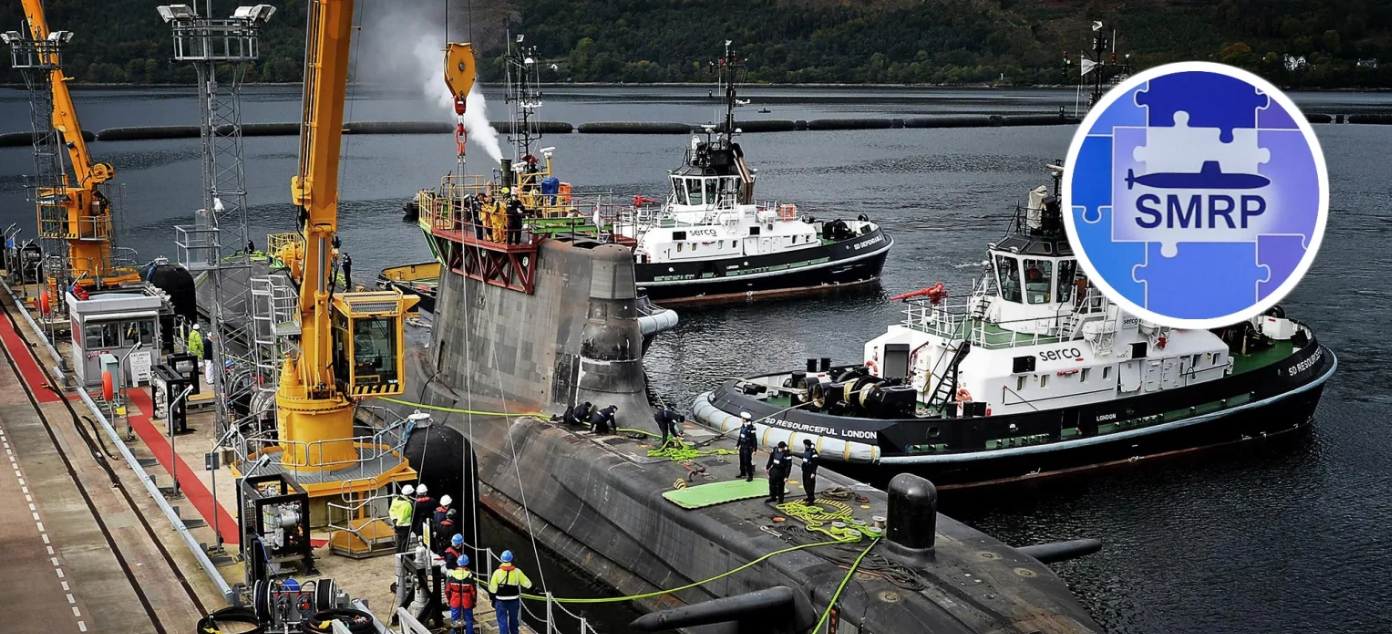
Navy Lookout — an excellent, entirely open-source Royal Navy analysis site — published a piece yesterday confirming that not a single one of the Royal Navy’s Astute-class attack submarines is currently at sea. Not one.
HMS Ambush hasn’t sailed since August 2022. HMS Artful, May 2023. HMS Audacious has spent the last three years waiting for, then sitting in, a dry dock at Devonport. HMS Astute is in for a mid-life refit that will take years. HMS Anson just came home early from an AUKUS deployment because the US-Iran situation flared and she was needed closer to home — and now she’s alongside too.
Submarines are supposed to be invisible. Their entire strategic value rests on uncertainty. An adversary who doesn’t know where your submarines are, or whether they’re ready, has to plan for the worst case. What does that mean in practice?
Let’s talk about the Falklands conflict for a moment. When tensions were raised before the invasion, Spartan and Splendid had already been sent down south. The press reported that Superb sailed south with the task force. Conqueror quietly, secretly, sailed the day after the invasion.
With the war underway, HMS Conqueror sank the General Belgrano. The Argentine fleet had split into two main elements — a carrier group and a surface action group. They knew they were taking a gamble with their limited ASW capability, and at the point the Belgrano was hit, the gamble was lost and the fleet was sent home — because what if the other submarines were closing on their carrier, just waiting for the moment to strike? They didn’t know how many there were. They didn’t know where they were.
Hypothetical: what if Conqueror had been the only submarine at sea, and that had been revealed by open-source tracking? The Argentines could have kept their carrier force out there, struck at the British fleet without the extreme range limitations they were forced to operate under from the mainland, and things could have had a very different outcome. Uncertainty was the weapon, every bit as much as the torpedo.
Right now, today, an adversary could be considering tapping an undersea cable, conducting signals intelligence off the coast, maybe even trying to track one of our Trident submarines — and they would know they didn’t have to watch their back for an Astute class about to ruin their day. That is bonkers.
I’m not saying Navy Lookout shouldn’t publish pieces like this, or that there shouldn’t be defence enthusiasts following these things closely. I am one. My point is this: a submarine at sea is invisible. A submarine that’s been in the same postcode for four years is infrastructure.
So why can I see them?
Two reasons, and both are failures of policy rather than bad luck.
The first is covered docks. Devonport and Faslane were built for a fleet five times the size of what we operate today. The physical capacity exists, or existed. And yet we don’t have covered berths capable of denying observers a clean view of the condition, activity and status of our most sensitive assets. A covered dock doesn’t make a submarine’s status impossible to determine — but it makes the assessment expensive and uncertain rather than free and obvious. Right now it’s free and obvious. Someone with a camera and a Saturday afternoon can tell you which boats are in pieces.
The goal isn’t perfect secrecy. It’s making the adversary’s intelligence picture cost something.
The second reason is why the boats are visible for so long in the first place. HMS Audacious waited twenty-two months for a dry dock — not for a part, not for a specialist, for a dock. That’s not technical complexity. That’s a capacity and prioritisation failure. And the refit times, once a boat gets in? Those are driven by decisions made decades ago: failure to secure long-term supply chains for a forty-year platform, failure to build open architectures, resulting in single-supplier dependencies where every repair and every upgrade goes back to the same contractor, on the same contractor’s timeline, at the same contractor’s price. We designed in the delay and called it procurement.
Why isn’t this solved?
None of this is new. Covered infrastructure, supply chain security, open architecture — these are known solutions to known problems. I think the honest answer is that we’ve allowed people to get away with “of course nuclear submarines are expensive and difficult to operate” as a rationale for cost overruns and delays for too long. Yes, they are expensive. Yes, they are difficult to operate. But waiting twenty-two months for a parking space is not a nuclear submarine problem. That’s a failure of accountability.
So what’s being done about it?
Actually, more than you might think — and that makes the situation simultaneously more hopeful and more infuriating.
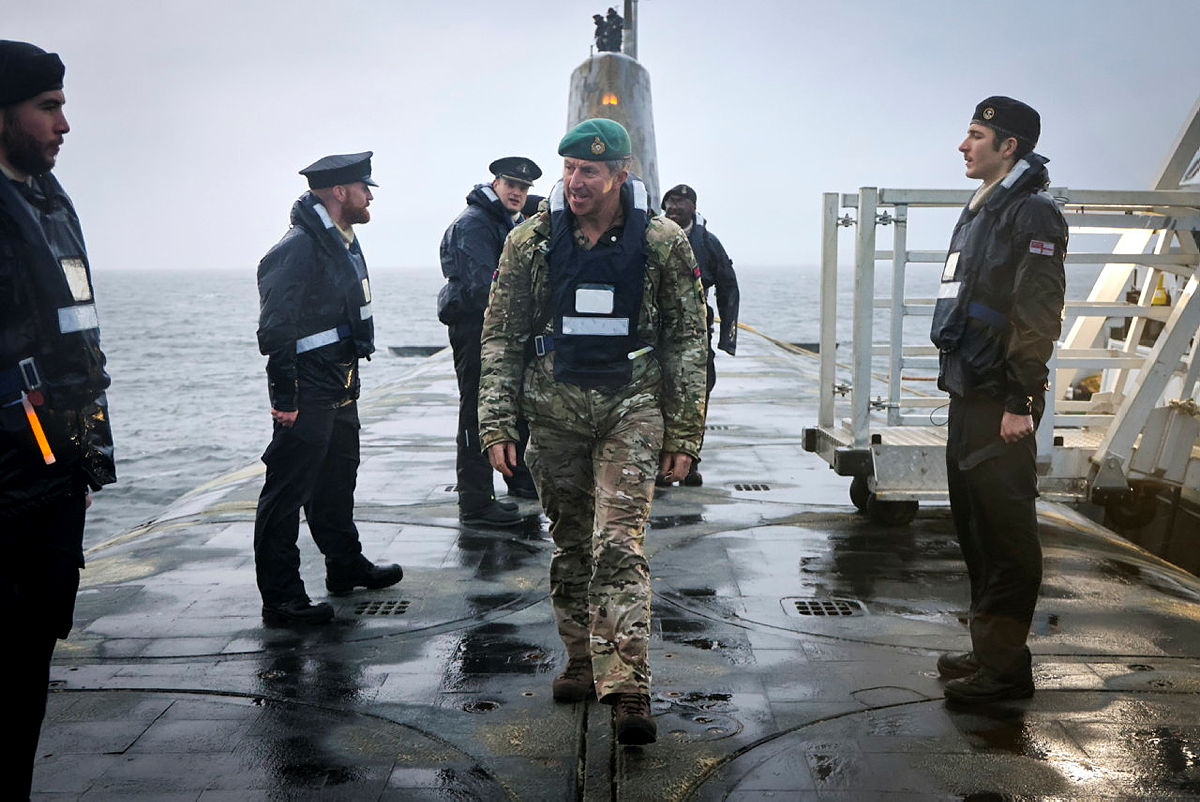
Admiral Sir Gwyn Jenkins, First Sea Lord, has shown the instict you’d expert of a man who wears the Green beret and sports the Fairbairn-Sykes dagger. He named the crisis, set a 100-day clock, and put his personal credibility behind a Submarine Maintenance Recovery Plan. In a system that worships caution and consensus, that takes guts.
But a commando is only as effective as his logistics. And in a cruel irony, Jenkins’ supply chain — the Treasury — has just told him his supply - money, will be late and probably not what he was hoping for. The government that should be backing him just ran out of runway.
So what happens next? That’s not a rhetorical question — it’s the most important defence question of the moment. Because it turns out the say-do gap in UK defence isn’t actually in defence.
More on that next time.