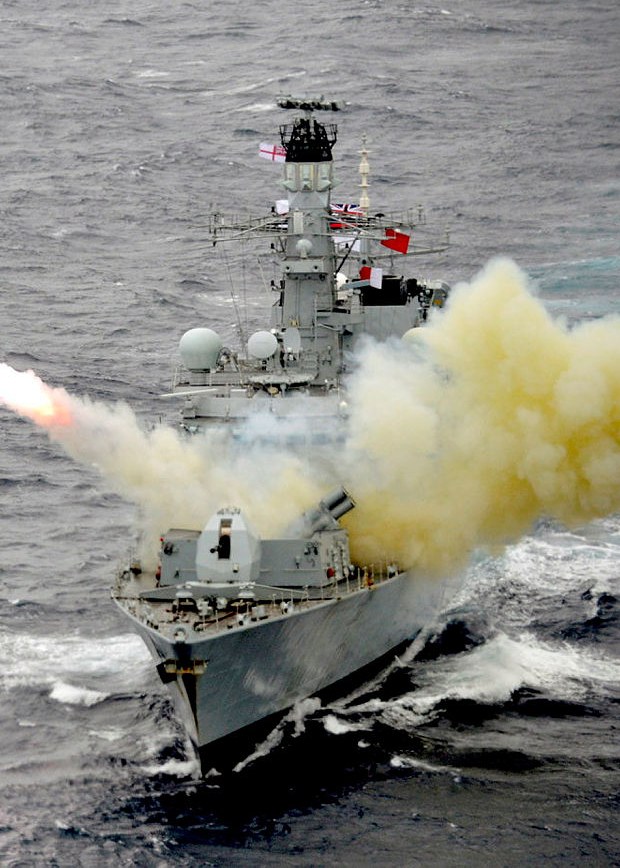
Defence has its eye on the wrong ball, and the cost is enormous
There’s a famous study by Simons and Chabris. Watch the video below, and count how many times the players in white pass the basketball.
About half the people who watch that video for the first time don’t see the gorilla. It walks into the middle of the frame, thumps its chest, and walks off. It’s not subtle. It’s not hidden. It’s just not what you were told to look for.
That’s not a flaw in the people who miss it. It’s what attention does. Tell someone what to count, and they will count it well — and miss almost everything else in the frame, including a gorilla.
Individuals miss the gorilla because attention is finite. Defence misses it because nobody was ever asked to look.
What is Defence looking for? We have a fascination with the next super weapon. Sixth-generation fighters. A hybrid navy. Battlefield robotics. We pay great attention to these things. And there’s a metric we don’t measure at all: what capability do we actually have, today.
I’m talking about a repeated theme, drawn out across decades, where the fascination with what’s next has cost us capability we already had. There’s a euphemism for this. We call it a “capability gap,” which actually means: we can’t do something we used to be able to do. You might also hear “capability holiday” — which sounds almost pleasant, like a rest. We call it that because “we are gambling that we won’t need this anytime soon” sounds a bit reckless.
But that’s what it is. Reckless.
Here are some examples from history.
Capability lost, then gapped
(things we used to be able to do)
| Capability | Lost | Regained (FOC) | Gap |
|---|---|---|---|
| Carrier airborne early warning | 1978 (Gannet retired) | Sea King/Searchwater lash-up fielded within 11 weeks in 1982 — real but structurally second-tier vs. fixed-wing AEW; retired 2018 with Crowsnest not ready. Crowsnest FOC still not confirmed achieved | 4 years with nothing (1978–82), then a second gap since 2018 |
| Airborne heavy anti-ship missile (Sea Eagle) | 1999/2000 (Sea Harrier); 2010 (Nimrod/Harpoon) | No replacement in service. FC/ASW (“Stratus”) planning assumption: Typhoon 2030, T26/T31 2028 — both dates already flagged by informed observers as unrealistic. Even then, restores air/surface-launch, not the maritime-patrol-launched role Nimrod held; P-8 Poseidon, in RAF service since 2020, still carries no anti-ship weapon | 25+ years and still open; no committed in-service date has yet held |
| Helicopter-launched light anti-ship missile (Sea Skua) | Sea Skua in service 1982–2017 (retired with Lynx, incompatible with Wildcat); Sea Venom programme only greenlit 2014, three years before the gap opened | Sea Venom, IOC Oct 2025, FOC 2026, range >20km vs Sea Skua’s 25km | 9 years (2017–2026) with no helicopter-launched anti-ship missile in RN service; range essentially flat or marginally reduced on top of that |
| Ship-launched anti-ship missile (Harpoon) | ~2018 (surface fleet Harpoon OSD) | NSM first live-fire, Sept 2025 (interim); Stratus/FC-ASW planned 2028, itself doubted | ~7 years unproven for NSM; long-range heavy successor still years off |
| Carrier-embarked fixed-wing air defence | 2006 (Sea Harrier retired) | 2012 (F-35B / carrier strike capability) | 6 years, no organic carrier air defence |
| Airborne laser designation (Tornado) | Jan 1991 (Gulf War start, GR1 had none) | Buccaneer recalled from retirement within weeks; TIALD fielded with 2 pods | Weeks nominal, effectively thin capability for months |
| ASW-specialist frigate numbers (Type 23 towed array) | Ongoing — 8 of 13 fitted, now down to 6 rotating TAPS duty | Type 26 IOC ~2028, FOC into 2030s | Live, ongoing, worsening |
| Boom-compatible air-to-air refuelling | Never held — Voyager fleet (2008 PFI contract) built hose-and-drogue only | Not fixed — RAF now examining options; GCAP (2035) already confirmed boom-only, same mismatch being repeated a sixth time | Live, ongoing, self-inflicted, and about to recur |
One programme, Stratus, is now being asked to close two separate historic gaps at once — the air-launched Sea Eagle role and the heavy ship-launched successor to Harpoon. That’s not double-counting. It’s a lot of institutional hope riding on a single missile.
Capability promised, never fully delivered
(“for but not with”)
| Programme | Promised | Actually delivered | Gap |
|---|---|---|---|
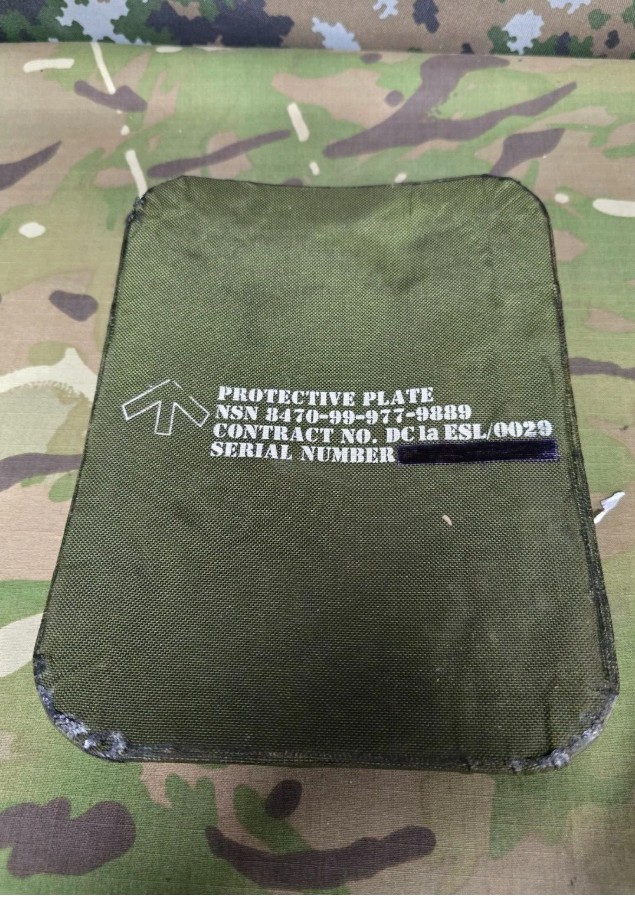
| Virtus body armour | Lighter system including new plates “in development” | Legacy Osprey/ECBA plates retained at launch; now cracking, replacement slipped 2023→2027 | ~11 years and counting |
| Voyager Defensive Aids Suite | DAS “delivered to specification” | Spec found inadequate for Afghan theatre entry; enhancement (3rd turret) began 2013 | Precise closure date unconfirmed |
| Phalanx CIWS | Mounting points for 4 systems per carrier | 3 ever intended; shared fleet-wide pool of ~41 systems rotated between hulls | Structural, permanent — not a “closing” gap |
| Typhoon precision strike (Project Centurion) | Seamless inheritance of Tornado GR4’s strike role | Delivered to Tranche 2/3 only; Tranche 1 (a third of the fleet) never received it at all | Permanent for Tranche 1 |
| Challenger 3 | ”Next-generation” British MBT | 148 tanks delivered against RUSI’s assessed 170–300 minimum for a credible armoured division | Not a timing gap — a scale gap baked in from the start |
Why this keeps happening
Why this keeps happening I can’t claim to know, but I can imagine. One project team is asked to manage an in-service capability. Another team comes along to procure the replacement. At that point there is an immediate perception that any money spent on the in-service capability is throwing good money after bad. Managing an in-service capability isn’t as sexy as bringing in the next generation, so money, people, interest gravitates to the new and shiny.
In the meantime, your in-service team are providing the capability you are going to war with if it kicks off today — and they aren’t getting any love at all. Spares supplies are being run down, supply chains are allowed to degrade, upgrades are cancelled. And the kick in the teeth here is that looking at these capability gaps, this isn’t a “don’t worry, we’re retiring it next month.” It’s years — plural, often double figures — of a project team having to beg, borrow and steal, while providing the capability we field right now.
So what are we doing about it? The story gets even worse. NISTA’s assessment of major projects is damning on defence. Strip away the language of “ambition” and “disciplined oversight,” and what’s left is defence effectively arguing its projects are different — that it shouldn’t be judged the same way as everyone else. NISTA has, in the meantime, practically halved the number of defence projects it reports on.
Do you think our enemies are going to say “well, their new equipment programme is behind schedule, it’s not really fair to attack them now”? No. That logic is right up there with the schoolyard football game where a team wasn’t paying attention and concedes a goal, and complains it isn’t fair because they weren’t ready.
That NISTA metric shouldn’t be being reduced. It should be paired with a new measure: an assessment of our capability against various mission types, sitting alongside the schedule metric as one of defence’s core performance measures. Project overruns will almost certainly keep happening. But with a “behind schedule” figure in one hand, and a diminishing-capability figure in the other, the choice in front of decision-makers becomes a much easier one for the human mind to actually face. Do I hope nothing happens during the gap? Do I hope the project pulls itself round and delivers on time? Or do I invest in the systems I already have?
Hope is not a strategy. And investing in what we already have carries one simple, important advantage: it’s been done before. It’s a proven route.
This is the ball that defence should be watching.
Illustrative extract — what a capability-exposure report might actually say
CAPABILITY: Surface-to-surface anti-ship strike (major combatant class)
| Metric | Status |
|---|---|
| Programme schedule status (NISTA-style) | AMBER — NSM in service, IOC achieved; FC/ASW (Stratus) on track against revised planning assumption |
| Capability held today | RED — no in-service weapon confirmed capable against a major surface combatant since Harpoon OSD |
| Days without capability (running total) | 2,704 days (~7.4 years) and counting from Harpoon OSD to NSM first live-fire; heavy-class capability (Sea Eagle successor) still not held |
| Mitigation in place | None — no interim system fielded following I-SSGW cancellation (2021) |
| Owner | Capability Owner (illustrative) — 1SL / Fleet Commander |
| Related at-risk capabilities (amber+) | Airborne anti-ship strike (below) |
CAPABILITY: Airborne anti-ship strike (major combatant class)
| Metric | Status |
|---|---|
| Programme schedule status (NISTA-style) | AMBER — FC/ASW (Stratus) Typhoon variant, planning assumption 2030 |
| Capability held today | RED — no in-service weapon since Sea Eagle retirement |
| Days without capability (running total) | 9,344 days (~25.6 years) and counting |
| Mitigation in place | None identified in public reporting. P-8 Poseidon, in service since 2020, carries no anti-ship weapon |
| Owner | Capability Owner (illustrative) — CAS / Air Component Commander |
| Related at-risk capabilities (amber+) | Surface-to-surface anti-ship strike (above) |
COMPOUND READOUT — where surface and airborne anti-ship strike are both red simultaneously
Populated only when two or more related capabilities are red/amber at once.
For the entire overlapping period, no British platform — ship, carrier aircraft, land-based fast jet, or maritime patrol aircraft — held a weapon capable of striking a major surface combatant beyond visual range. The only weapon remaining in the engagement chain against such a target is the 4.5-inch naval gun, with a maximum extended-range reach of approximately 27km.
This isn’t a threat confined to a handful of specialist ships. Missiles like Russia’s P-800 Oniks (range 120–300km, with newer variants claimed out to 800km) and China’s YJ-18 (220–540km) are standard-issue anti-ship weapons, fitted as a matter of course to ordinary frigates and destroyers, fired from submarines that never need to surface, launched from aircraft, or driven to a coastline on the back of a truck. Any of those, of a type in routine service with a capable state, could open fire on a Royal Navy ship from four to twenty times beyond the distance at which the RN could reply with its only remaining weapon. In practice, a ship in this position would need to close to within gun range to engage at all — a range no such opponent would ever need to enter.
CAPABILITY: Light anti-ship strike (fast attack craft / corvette class)
| Metric | Status |
|---|---|
| Programme schedule status (NISTA-style) | GREEN — Sea Venom FOC achieved 2026 |
| Capability held today | GREEN — in service |
| Days without capability (running total, historic) | 3,285 days (2017–2026), now closed |
| Note | For calibration only — this class of weapon (30kg warhead) was never assessed capable against major surface combatants, only fast attack craft and corvette-sized vessels |
The point of laying it out this way: every line in the “programme schedule status” column can — and does — show amber or green while the capability itself sits at red for years at a time. A minister citing the first column is not lying. They are answering a different question to the one that matters on the day a ship needs to defend itself.
Small change. Not difficult to achieve. Truthful, and complimentary to defence’s own efforts to improve visibility and understanding of readiness, availability, and capability.
What this achieves: if this were part of standard reporting, it would draw attention — and unlock the funding to avoid the huge and unnecessary risks being taken today. It’s easy to say we had to have a capability gap because of budgets, but in my opinion that’s a whitewash for poor planning.
And it’s happening again, right now
Of course this isn’t just a historic issue. One live issue from each service. We’ve talked about standoff anti-ship strike capability for the Navy. It should be no surprise that next up we feature the troubled Ajax programme and an infantry fighting vehicle retired without its replacement ready, or arguably even ready to be called the same thing. Warrior’s own upgrade programme, WCSP, was cancelled in 2021 — at the exact moment Ajax’s vibration and noise problems were becoming public knowledge. That’s not just a missed piece of information that stands up poorly in retrospect. That was known, in real time, while the decision was being made.
Warrior is now fixed to leave service in 2027. Ajax — whatever the exact role mapping, whatever the MOD’s structural argument about recce versus troop-carrying — is its stated replacement. And Ajax is still failing basic safety trials. Full Operating Capability isn’t due until 2028 or 2029 at the earliest — a year or more after Warrior is gone.
You don’t need to argue about hull counts or role splits to see the problem. Whatever the org chart says Ajax is for, the question that actually matters is whether a working, deployable armoured capability exists on the day Warrior leaves. By the MOD’s own dates, it doesn’t.
For the RAF, I’ll pick boom air-to-air refuelling. The UK’s Voyager fleet was locked into a hose-and-drogue-only configuration under a 2008 PFI contract, years before anyone had decided what would eventually need refuelling from it. Since then, one boom-only aircraft after another has joined the inventory anyway — C-17, P-8 Poseidon, RC-135 Rivet Joint, E-7 Wedgetail, and now F-35A. Every one of them was ordered knowing the tanker fleet couldn’t sustain it. Asked about it in the Commons, the defence minister’s answer was that NATO would cover the gap. Britain now depends on its allies to keep its own frontline jets fuelled in the air.
And the mistake isn’t even finished being made. GCAP, the fighter meant to define UK air power into the 2040s, has already been confirmed as boom-only — with the RAF publicly admitting it doesn’t yet have a plan to fix it. The next generation of the exact same problem is being built in before the current one is even resolved.
What is Defence looking for? Not this. Never this. The ball everyone’s watching is the platform. Nobody’s watching whether it can actually fly.